
Auto Insurance News
1. Introduction
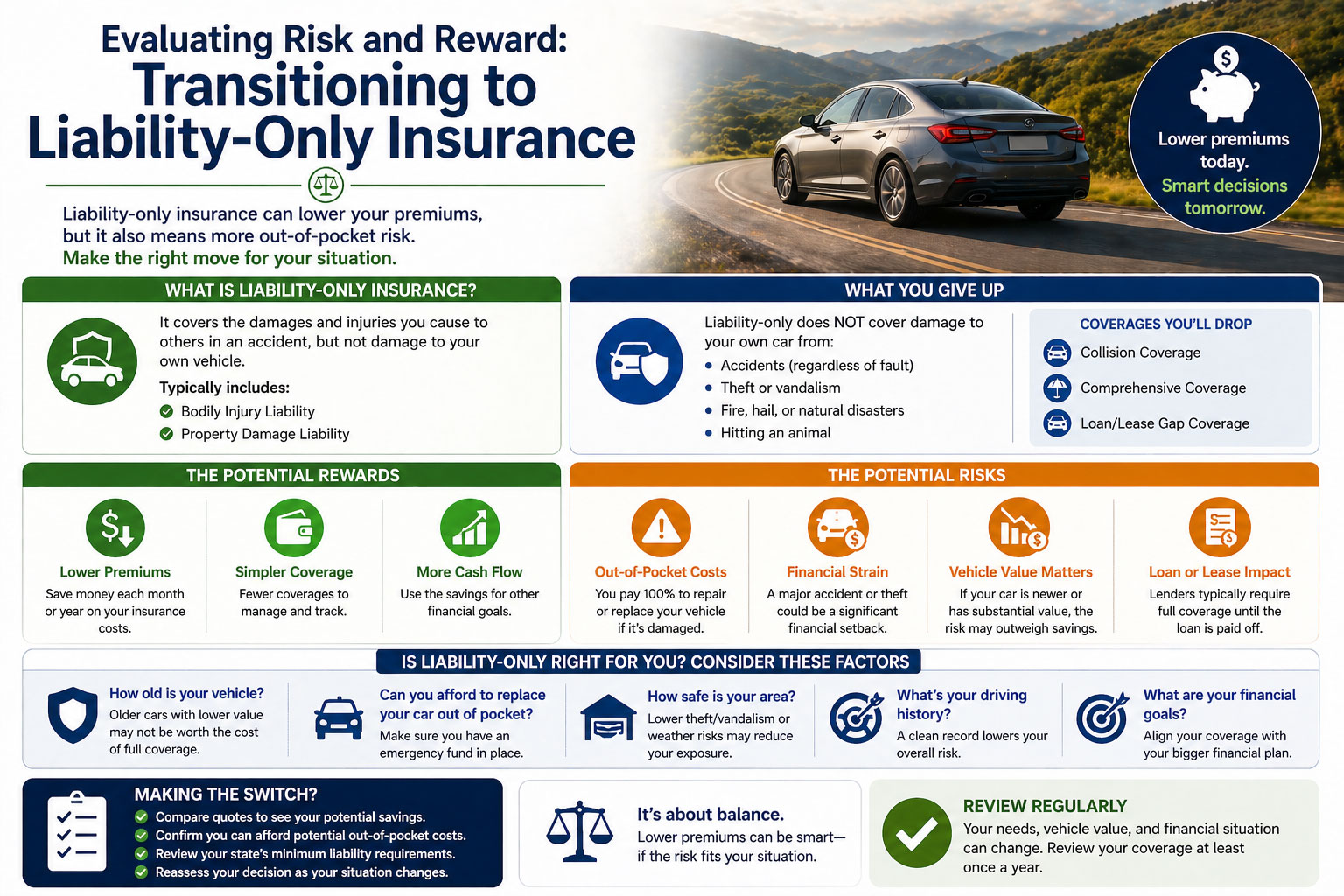
For many drivers, auto insurance is one of the largest monthly household expenses. As a vehicle ages, the financial protection provided by “full coverage” often becomes an expensive redundancy rather than a safety net. Transitioning to liability-only insurance is a strategic move that can free up significant monthly cash flow. This shift usually makes sense when the cost to insure the car against damage exceeds the likely payout you would receive after a claim.
To ensure you are making the best choice for your budget, it is important to look at the market regularly. Readers can use autoinsuranceplans.com to compare quotes from insurance companies. Seeing the difference in cost between a full coverage policy and a liability-only policy can provide the clarity needed to make a final decision.
2. What This Service Includes
Dropping full coverage is technically a reduction in the scope of your insurance contract. You are moving from a “physical damage” policy to a “third-party” policy.
Defining Liability-Only in Simple Terms
Liability-only insurance is the base level of coverage. It protects your assets by paying for the damage you cause to other people and their property. It satisfies the legal requirements in nearly every state. When you drop full coverage, you are removing the part of the policy that pays for your own vehicle repairs.
What is Typically Included in the Transition
When you make this change, you keep your Bodily Injury Liability and Property Damage Liability. You also generally keep Uninsured Motorist coverage, as this protects you if someone without insurance hits you. What you are removing is the Collision and Comprehensive portions of the policy.
What is Usually Extra
Even with liability-only insurance, you can often keep small, helpful add-ons. Roadside assistance and towing are frequently available as inexpensive extras that do not require you to have full collision coverage. However, most “replacement value” or “new car replacement” features are only available if you maintain a full coverage policy.
3. Average Cost Overview
The savings from dropping full coverage can be dramatic, especially for drivers in high-cost states or those with less-than-perfect driving records.
Comparison of Annual Insurance Costs
| Service Option | Typical Annual Price Range |
| Liability-Only (Minimum) | $400 to $800 |
| Liability-Only (High Limits) | $700 to $1,200 |
| Full Coverage Bundle | $1,500 to $3,000 |
The drivers who see the most savings are those who previously had low deductibles on older cars. If you are paying 150 dollars a month for full coverage on a car worth only 3,000 dollars, you are essentially buying a new car for the insurance company every 20 months. Dropping to liability-only could cut that bill by 60 percent or more.
Ready to move forward? Use www.autoinsuranceplans.com to compare quotes from trusted local auto insurance companies so you can secure a policy with confidence.
4. Key Cost Factors
Understanding what drives the price of these options helps you decide where to cut.
- Vehicle Market Value: This is the most important factor. If the market value of your car is under 4,000 dollars, the risk of paying high premiums for collision coverage usually outweighs the benefit.
- Driver History: If you have a history of being at fault in accidents, your collision premium will be very high. Dropping it saves you more money than it would save a safe driver.
- Geographic Location: In urban areas with high vandalism or theft rates, comprehensive insurance is very expensive. Moving to liability-only can save hundreds of dollars in these specific zip codes.
- Deductible vs. Value: Always subtract your deductible from the car’s value before deciding. If the result is a small number, the coverage is not serving you well.
- Local Repair Costs: If parts for your older car are hard to find and expensive, the insurer will likely total the car rather than fix it, making full coverage even less useful.
5. Ways to Save Money Without Cutting Corners
Self-Insuring
The most effective way to save when dropping coverage is to “self-insure.” Take the money you save each month on your premium and put it into a dedicated savings account. If you go three years without an accident, you will likely have enough saved to buy a replacement car outright, whereas that money would have been gone forever if paid to an insurance company.
Review Coverage Required by Law
Check your state’s minimum requirements. Sometimes, drivers carry liability limits that are far higher than necessary for an old car. While high liability is good for protecting a home or savings, you can adjust these limits to find a balance that fits your current financial situation.
6. Common Mistakes and Red Flags
A frequent mistake is forgetting to update your policy as the car depreciates. Many people keep the same coverage levels for 10 years. By year seven, they are likely overpaying for a service they will never fully utilize.
Another red flag is “over-insuring” a car that has structural damage or a salvage title. If a car has already been totaled once and rebuilt, the insurance company will pay very little in a second claim. Paying for full coverage on a salvage title vehicle is almost always a waste of money.
7. Frequently Asked Questions (FAQ)
Is there a “magic number” for when to drop full coverage?
Most experts suggest that if your annual premium is more than 10 percent of your car’s value, or if the car is worth less than 4,000 dollars, you should consider dropping it.
Does my credit score affect the cost of liability-only insurance?
Yes. In most states, insurers use credit-based insurance scores to set premiums for all types of coverage, including liability.
Can I keep comprehensive but drop collision?
Yes. This is a popular choice for people who want protection against theft or fire but are willing to take the risk of an accident.
Will I still have coverage for medical bills?
If you have Medical Payments or Personal Injury Protection, that will still cover you. Those are separate from collision and comprehensive.
If my car is totaled and I have liability only, who pays?
If you were at fault, no one pays for your car. If the other driver was at fault, their insurance company should pay you.
How quickly does a car lose value?
Most cars lose about 20 percent of their value in the first year and 10 to 15 percent each year after that.