Auto Insurance News
Introduction
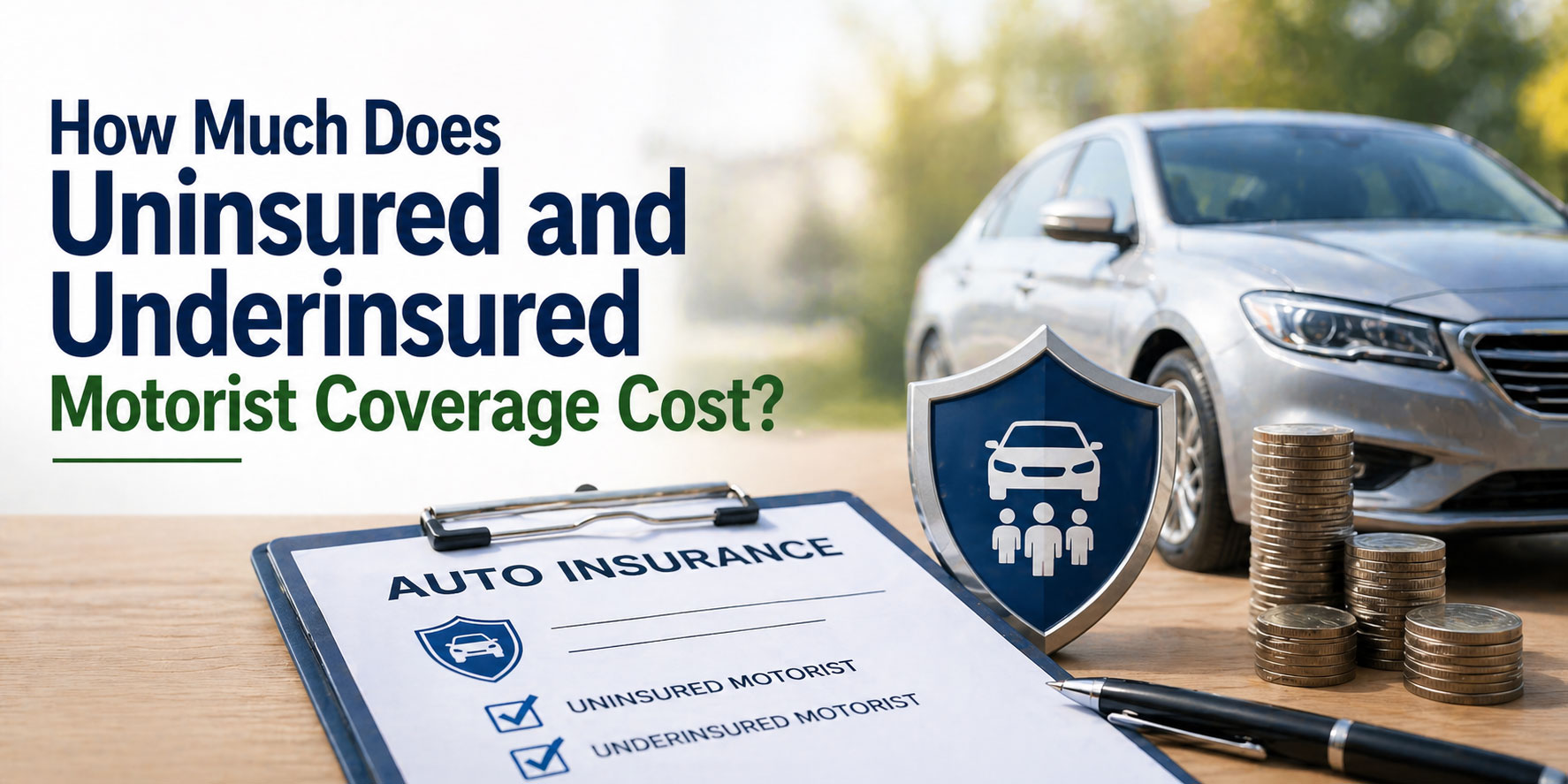
When you are shopping for auto insurance, price matters. But understanding what you are paying for matters just as much. Uninsured motorist coverage (UM) and underinsured motorist coverage (UIM) are two of the most cost-effective protections available to U.S. drivers, yet many people skip them or choose limits that are far too low because they do not fully understand the pricing.
This guide breaks down exactly what UM and UIM coverage costs across different situations, what drives those costs up or down, and how to find the best rate without sacrificing the protection you need. You can compare quotes from multiple insurers at autoinsuranceplans.com to see real numbers for your specific location and vehicle.
What This Service Includes
The Core Protection
Uninsured and underinsured motorist coverage protects you financially when another driver causes an accident and either has no insurance (UM) or not enough insurance to pay for your full losses (UIM).
Coverage typically falls into two categories:
Bodily Injury (UMBI and UIMBI): Pays for your medical treatment, rehabilitation, lost income, and related damages when you or your passengers are injured by an uninsured or underinsured driver.
Property Damage (UMPD and UIMPD): Pays to repair or replace your vehicle when it is damaged by an uninsured or underinsured driver. This is available in most but not all states and may come with or without a deductible depending on state rules.
What Is Not Included
UM and UIM do not cover your vehicle for theft, weather events, or vandalism. They do not pay for the other driver’s injuries or damages. They do not replace liability insurance, collision coverage, or comprehensive coverage. If you want full protection, UM and UIM work alongside those coverages rather than replacing them.
Average Cost Overview
UM and UIM are typically among the least expensive parts of an auto insurance policy. Here is a breakdown of what drivers can expect to pay annually across common coverage tiers.
| Coverage Tier | Coverage Limits | Typical Annual Cost |
| State minimum UM/UIM | $25k/$50k | $50 to $100 |
| Standard UM/UIM | $100k/$300k | $100 to $200 |
| High-limit UM/UIM | $250k/$500k | $200 to $400 |
| Stacked UM/UIM (2 vehicles) | Varies by state | $250 to $500 |
| Combined UM/UIM add-on to full policy | All tiers | Adds 5% to 10% to total premium |
As a practical example, a driver in Ohio carrying $100,000/$300,000 in UM/UIM bodily injury coverage might pay roughly $120 to $160 per year for that component alone. A driver in Florida, which has one of the highest uninsured driver rates in the country, may pay closer to $180 to $250 for similar limits.
The low end of the range reflects drivers in states with low uninsured motorist rates, clean records, rural locations, and older vehicles. The high end reflects urban drivers in high-risk states, drivers with prior claims, or those selecting the highest available limits.
Ready to see your real numbers? Use www.autoinsuranceplans.com to compare UM and UIM quotes from multiple carriers in your area and get the protection you need at a price that works for your budget.
Key Cost Factors
- Your state’s uninsured motorist rate. States like Florida (about 20% uninsured), Mississippi, and New Mexico have significantly higher uninsured driver populations. Insurers in these states price UM/UIM accordingly.
- Required vs. optional coverage. In states where UM/UIM is mandatory, baseline pricing tends to be more stable. In states where it is optional, pricing varies more widely between carriers.
- Bodily injury limits. The higher the per-person and per-accident limits you choose, the higher your premium. Doubling your limits from $50k/$100k to $100k/$300k does not double your cost, but it does increase it meaningfully.
- Property damage component. Adding UMPD to your policy raises the overall cost modestly, but the protection it provides for your vehicle in a hit-and-run can be worth more than the premium difference.
- Stacking availability. States like Florida and Pennsylvania allow stacked policies. If you have two vehicles each with $100k UM limits, stacking gives you access to $200k per accident. This added coverage comes at a higher price.
- Your claims history. Drivers with prior at-fault accidents or UM/UIM claims may see higher premiums across the board.
- Vehicle type and value. Higher-value vehicles may result in slightly higher UMPD pricing because repair or replacement costs are greater.
- Deductible choices. Where states allow a deductible on UMPD, choosing a higher deductible (for example, $500 rather than $250) reduces your premium slightly.
- Insurer pricing models. Different companies weigh risk factors differently. One insurer may charge significantly more than another for the same coverage in the same zip code. This is why comparing quotes is so valuable.
Ways to Save Money Without Cutting Corners
Start by understanding what is legally required in your state. Some states require you to carry UM bodily injury coverage. Others allow you to reject it in writing. Knowing the baseline helps you decide where to add coverage and where you can adjust.
Compare at least three to five quotes. UM/UIM pricing can vary by 30% or more between carriers for identical coverage. Use autoinsuranceplans.com to run comparisons quickly without having to call each company separately.
Consider your existing health insurance. If you have strong health insurance with low out-of-pocket maximums, you may be comfortable carrying slightly lower UMBI limits. However, UM still covers lost wages and pain and suffering that health insurance does not.
Match your UM/UIM limits to your liability limits. This is a widely recommended strategy that gives you consistent coverage without paying for gaps on one side. It also simplifies your policy structure.
Bundle everything with one carrier. Adding UM/UIM to a policy that already includes liability, collision, and comprehensive is almost always cheaper than piecing together coverage from multiple companies.
Ask specifically about UM/UIM discounts. Some carriers apply safe driver or loyalty discounts to this coverage component. It never hurts to ask.
Common Mistakes and Red Flags
Choosing minimum limits because they are the cheapest. State minimums for UM/UIM are often set at levels that were reasonable decades ago but no longer reflect the cost of a serious accident. A single hospital stay can exceed $100,000. Minimum limits of $25,000 can be exhausted quickly.
Rejecting UM/UIM to save $8 to $15 per month. The math rarely makes sense. The annual cost of solid UM/UIM coverage is often less than a single tank of gas per month.
Not reviewing your limits after a life change. If your income has grown, you have taken on a mortgage, or you have children, your financial exposure in an accident has grown too. Your coverage limits should reflect your current situation, not what you chose five years ago.
Assuming your collision coverage is enough. Collision pays to repair your vehicle regardless of fault, but it typically comes with a deductible of $500 to $1,000. UMPD in some states has no deductible for accidents involving an uninsured driver.
Shopping only on price. The cheapest UM/UIM policy is not always the best. Look at the insurer’s claims handling reputation and financial strength rating, not just the premium.
Frequently Asked Questions
How much does UM/UIM typically add to my total premium? For most drivers, UM/UIM adds between 5% and 10% to a standard full-coverage policy. On a $1,200 annual premium, that is roughly $60 to $120 per year.
Is there a deductible for UM coverage? For bodily injury UM claims, there is typically no deductible. For UMPD, some states allow a deductible, often between $200 and $500.
Can I get UM coverage without UIM? In most states, yes. However, many insurers offer them as a paired package, and buying both is strongly recommended since the price difference is usually small.
Does UM/UIM cover me as a pedestrian? In most states, yes. If you are struck by an uninsured driver while walking or cycling, your own UM bodily injury coverage typically applies.
Does UM coverage apply if I borrow someone else’s car? It depends. Your own UM/UIM coverage may follow you as a driver in some situations, but the car owner’s policy is typically primary. Check your specific policy language.
What states have the highest uninsured driver rates? Florida, Mississippi, New Mexico, Michigan, and Tennessee consistently rank among the states with the highest percentages of uninsured drivers, making UM/UIM especially valuable in those states.
How do I know if a quote includes UM/UIM? Always ask specifically. When comparing quotes, confirm whether the price includes UM bodily injury and UM property damage, and at what limits.
Is UIM worth it if I already have good health insurance? Yes, because UIM covers more than medical bills. It also covers lost wages, pain and suffering, and long-term disability losses that health insurance does not address.