Auto Insurance News
Introduction
One of the first questions drivers ask when shopping for car insurance is: how much will this actually cost me? The answer is not simple because auto insurance pricing is highly personalized. Two drivers with identical cars can receive quotes that differ by hundreds of dollars per year.
Understanding what goes into your premium, what typical costs look like across the country, and how to reduce your rate without sacrificing protection can save you real money. This guide covers everything you need to know about the cost of full coverage auto insurance in plain, direct language.
When you are ready to see real numbers for your specific situation, autoinsuranceplans.com lets you compare quotes from multiple insurers in one place so you can find the best rate available to you.
What This Service Includes
What Full Coverage Insurance Is
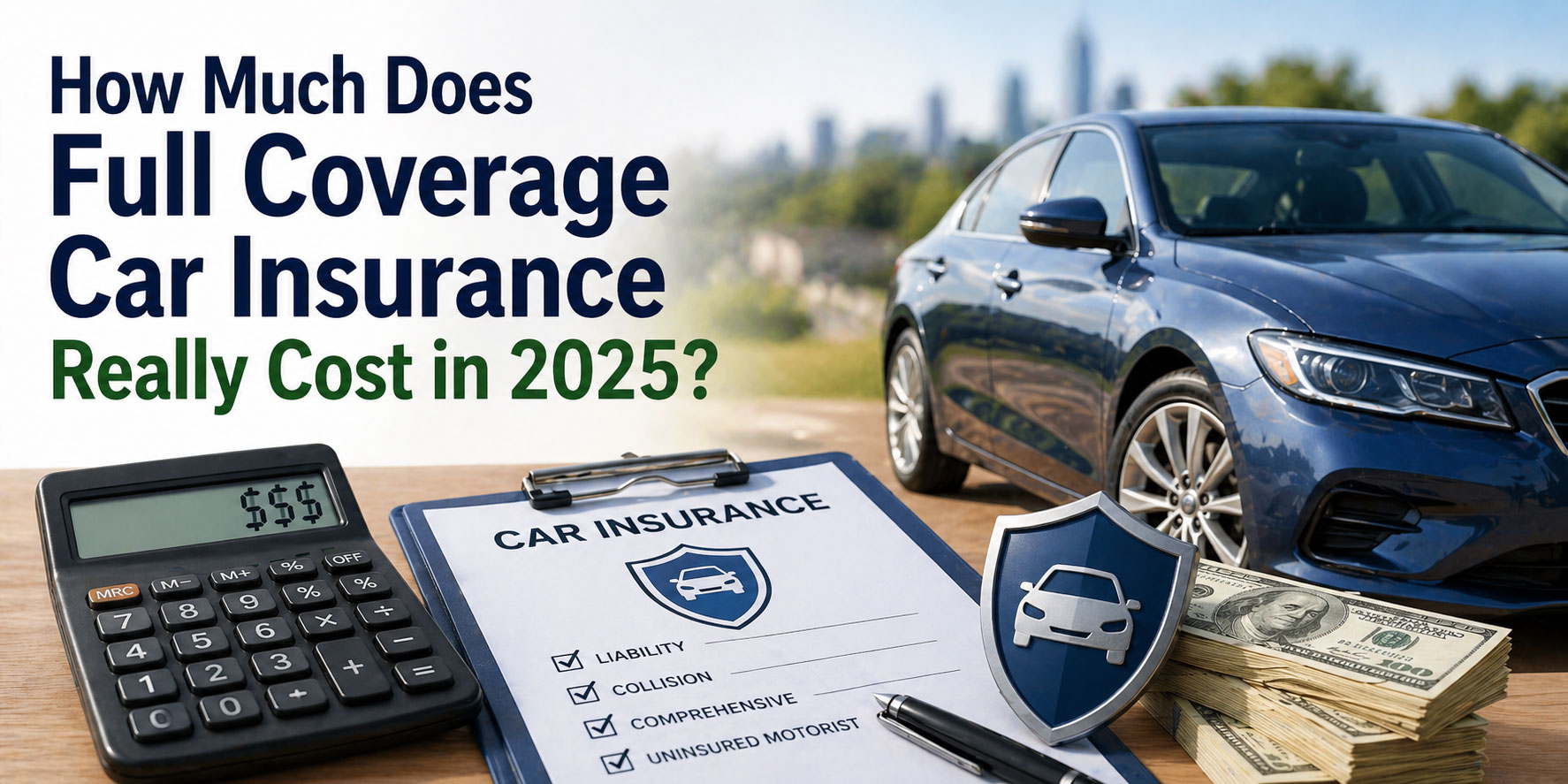
Full coverage is the combination of three core coverage types: liability coverage, collision coverage, and comprehensive coverage. Together, they protect you from the broadest range of financial risks on the road.
Liability coverage pays for injuries and property damage you cause to others. Collision coverage pays to repair or replace your own vehicle after an accident involving another vehicle or object. Comprehensive coverage pays for damage to your vehicle from non-collision events such as theft, fire, flood, hail, and animal strikes.
What Is Typically Included in a Full Coverage Policy
A standard full coverage policy generally includes:
- Bodily injury liability
- Property damage liability
- Collision coverage with a chosen deductible
- Comprehensive coverage with a chosen deductible
- Uninsured and underinsured motorist coverage in most states
What Is Usually Extra
The following are typically add-ons that cost more:
- Medical payments coverage or personal injury protection
- Rental car reimbursement
- Roadside assistance and towing
- GAP insurance
- New car replacement coverage
- Rideshare coverage for drivers who use apps like Uber or Lyft
Average Cost Overview
The national average cost for full coverage auto insurance in the United States is approximately $1,500 to $1,800 per year, or roughly $125 to $150 per month. However, the range across individual drivers is wide.
| Coverage Level | Typical Annual Cost |
| Liability only (state minimum) | $400 to $700 |
| Full coverage, older vehicle | $900 to $1,400 |
| Full coverage, standard vehicle | $1,400 to $1,900 |
| Full coverage, new or high-value vehicle | $1,800 to $3,500+ |
| Full coverage, young or high-risk driver | $2,500 to $5,000+ |
State location has a dramatic effect on pricing. Drivers in Michigan, Florida, and Louisiana consistently pay among the highest premiums in the country due to high accident rates, litigation environments, and state insurance laws. Drivers in Iowa, Vermont, and Idaho pay among the lowest.
The low end of the range typically applies to drivers over 30 with clean records, standard vehicles, moderate mileage, and policies with higher deductibles. The high end applies to young drivers, those with recent claims or violations, drivers with poor credit in states that allow credit scoring, or those insuring newer and more expensive vehicles.
Use autoinsuranceplans.com to get real quotes based on your actual profile so you know exactly what full coverage will cost you, not just the national average.
Key Cost Factors
The following variables have the biggest impact on what you pay for full coverage insurance.
- Driver age. Drivers under 25 pay significantly more due to higher accident rates in that age group. Rates decrease steadily through the mid-30s and generally stabilize for experienced drivers. Rates can increase again for drivers over 75 in some states.
- Driving record. A single at-fault accident can raise your premium by 20 to 40 percent. A DUI or reckless driving conviction can double your rate. Clean records earn the lowest base rates.
- Vehicle make and model. Sports cars, luxury vehicles, and vehicles with expensive parts cost more to insure. Safety ratings, theft rates, and repair costs for a specific model all factor into pricing.
- Urban drivers pay more than rural drivers. ZIP codes with high rates of theft, vandalism, or severe weather also carry higher premiums.
- Choosing a $1,000 deductible instead of a $250 deductible on both collision and comprehensive can reduce your overall premium by 10 to 30 percent, depending on the insurer and vehicle.
- Credit score. In most states, insurers use a credit-based insurance score that correlates with claims behavior. Drivers with excellent credit pay meaningfully less than those with poor credit for the same coverage.
- Annual mileage. Low-mileage drivers, generally under 7,500 miles per year, often qualify for discounts. The less you drive, the lower your statistical exposure to accidents.
- At-fault vs. no-fault state. No-fault states require personal injury protection coverage, which adds to the total cost of a full coverage policy.
- Claims history. Multiple recent claims, even if not at fault, can raise your premium because frequency is itself a risk signal to insurers.
- Coverage limits. Higher liability limits cost more but provide stronger financial protection. Choosing 100/300/100 limits costs more than carrying state minimums but provides far more protection.
Ways to Save Money Without Cutting Corners
Know What Is Required and What Is Optional
Liability coverage is legally required in almost every state. Collision and comprehensive are optional unless your vehicle is financed. If your car is older and fully paid off, dropping collision coverage can save you $300 to $700 per year while still keeping you legally covered.
Compare Quotes Every Year
Premiums change. Your profile changes. Insurers adjust their pricing models constantly. The insurer that offered the best rate two years ago may no longer be competitive today. Comparing three to five quotes at each renewal takes a small amount of time and can result in significant savings.
Take Advantage of Discounts
Common discounts include:
- Multi-policy (bundling home and auto)
- Multi-vehicle (insuring more than one car)
- Good driver or accident-free discount
- Defensive driving course completion
- Low mileage or pay-per-mile programs
- Vehicle safety features such as anti-lock brakes, airbags, and anti-theft devices
- Student discounts for young drivers with good grades
Use Telematics Programs
Many insurers now offer programs that track your driving behavior through a mobile app or plug-in device. Safe driving habits, smooth acceleration, and avoiding late-night driving can earn you discounts of 10 to 30 percent with some programs.
Raise Your Deductible
If you have an emergency fund that could cover a $1,000 deductible, raising it from $250 or $500 can meaningfully reduce your collision and comprehensive premiums without reducing your actual coverage.
Improve Your Credit
In states where credit scoring is allowed, improving your credit score over time can lead to lower insurance premiums at renewal. Even moving from fair to good credit can result in noticeable savings.
Common Mistakes and Red Flags
Insuring a low-value car with full coverage. If your car is worth $3,000 and you are paying $1,200 per year for full coverage with a $500 deductible, the maximum you would receive from a total loss is $2,500. That may not justify the ongoing cost.
Ignoring the insurer’s financial strength rating. A cheap policy from a financially weak insurer is risky. Check AM Best or Standard and Poor’s ratings before committing to a company you are not familiar with.
Letting the policy lapse. A gap in coverage, even for a few days, can raise your premiums when you reapply because insurers view uninsured drivers as higher risk. Set up automatic payments to avoid accidental lapses.
Not reading the declarations page. The declarations page summarizes exactly what you are covered for and at what limits. Many drivers never read it. Reviewing it takes minutes and confirms you have the coverage you think you have.
Assuming all full coverage policies are equal. Two full coverage policies at the same price can have very different liability limits, deductibles, and included extras. Compare apples to apples when shopping.
Filing small claims when it is not financially worthwhile. Every claim you file is recorded and can affect your future rates. For minor damage close to your deductible amount, paying out of pocket often costs less in the long run.
Frequently Asked Questions
What is the average monthly cost for full coverage? Nationally, full coverage averages roughly $125 to $150 per month for a driver with a clean record and a standard vehicle. Rates vary significantly by state, age, and driving history.
Is full coverage worth it on an older car? Generally not if the car’s market value is less than 10 times your annual collision premium. Calculate your car’s current value, subtract your deductible, and compare that to your annual premium to decide.
Does full coverage pay for my medical bills after an accident? Not automatically. Full coverage addresses vehicle damage. Medical payments coverage or personal injury protection is a separate add-on that covers injury-related expenses for you and your passengers.
What is the cheapest way to get full coverage? Choose higher deductibles, maintain a clean driving record, bundle with a home or renters policy, and compare quotes from multiple insurers each year. Using autoinsuranceplans.com to compare options is one of the fastest ways to find competitive pricing.
How much does full coverage cost for a 20-year-old driver? Young drivers pay significantly more. A 20-year-old with a clean record can expect to pay $2,500 to $4,000 or more per year for full coverage depending on the vehicle and state.
Will my full coverage pay if someone else drives my car and has an accident? In most cases, yes. Insurance follows the vehicle, not the driver. If you gave someone permission to drive your car, your policy generally covers the accident. Excluded drivers listed on the policy are an exception.
Does full coverage include roadside assistance? Not automatically. It is an optional add-on on most policies. Given the low cost, usually $5 to $15 per year, it is worth adding.
Can I have full coverage without a deductible? Some insurers offer zero-deductible options, but they come with higher premiums. It is generally more cost-effective to carry a deductible and use the premium savings to build a small emergency fund.
How does living in a no-fault state affect my full coverage cost? In no-fault states, your policy must include personal injury protection, which adds to the overall cost. States like Michigan and Florida have some of the highest full coverage premiums in the country partly because of no-fault requirements.
How often should I shop for a new full coverage policy? At every renewal, or at least once per year. Your rates may have changed, competing insurers may be offering better pricing, and your own profile (car value, credit, driving record) may have improved in ways that qualify you for lower rates.