
Auto Insurance News
1. Introduction
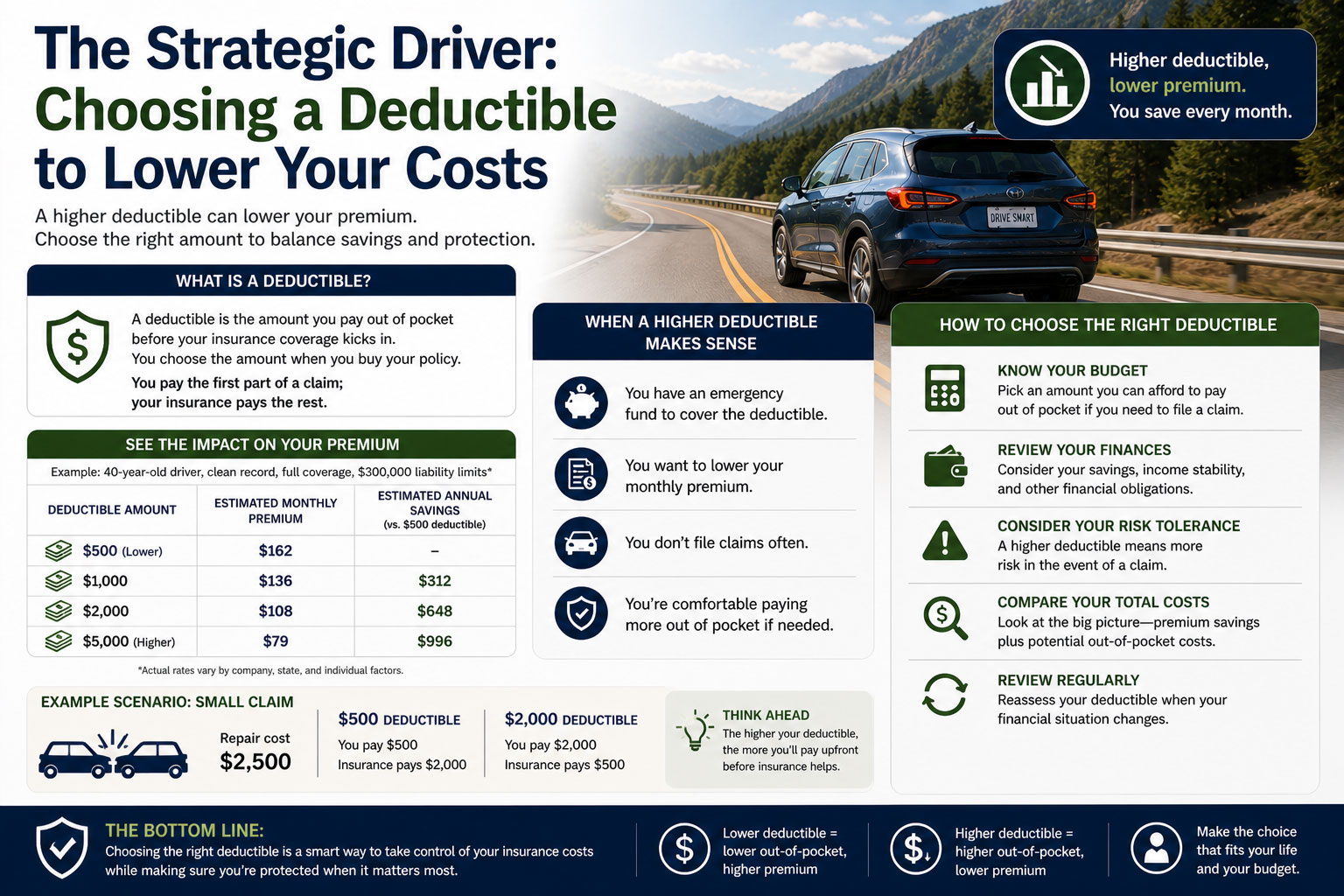
For many Americans, auto insurance is one of the largest monthly household expenses. Finding ways to reduce this cost without losing essential protection is a top priority. The most effective tool for this task is the deductible. By understanding the relationship between out of pocket risk and monthly premium savings, you can take control of your financial future.
Drivers usually need to rethink their deductible when they experience a change in their commute, an increase in their savings, or when their vehicle reaches a certain age. Whether you are looking to save ten dollars a month or five hundred dollars a year, the deductible is the first place you should look. To start your comparison and see how different insurers treat deductible levels, readers can use autoinsuranceplans.com to compare quotes from insurance companies. This transparency is the first step toward a smarter policy.
2. What This Service Includes
Deductible selection is a core part of the “Product Customization” service provided by auto insurers.
Defining the Service in Simple Terms
The deductible is the amount you are responsible for paying before your insurance company covers a loss. It is a threshold that separates small, manageable expenses from large, catastrophic ones.
What is Typically Included
Your deductible applies to:
- Physical Damage Coverages: This includes both Collision and Comprehensive.
- Personal Injury Protection (PIP): In some states, medical coverage for you and your passengers also has a deductible.
- Uninsured/Underinsured Motorist Property Damage: Depending on your state, this may have a small deductible.
What is Usually Extra or Not Included
There are “Zero Deductible” endorsements that you can add to your policy for specific things like glass repair or towing. While these are convenient, they are essentially “pre paying” for a potential claim through higher monthly premiums. Most experts suggest that these extras are not worth the cost if you are trying to minimize your overall insurance spend.
3. Average Cost Overview
The cost of your insurance is a reflection of the risk the company is taking. A higher deductible dramatically lowers that risk.
Typical Price Ranges
- Low Premium Range: Achieved by choosing a 1,000 to 2,500 dollar deductible.
- Average Premium Range: Found with a 500 dollar deductible.
- High Premium Range: Found with a 0 to 250 dollar deductible.
Cost Savings Table: Moving from $500 to $1,000 Deductible
| Driver Type | Current Annual Premium ($500 Ded) | New Annual Premium ($1,000 Ded) | Estimated Annual Savings |
| Clean Record / Standard Car | $1,200 | $1,020 | $180 |
| High Risk / New Car | $2,500 | $1,875 | $625 |
| Teen Driver / Older Car | $3,000 | $2,100 | $900 |
What Drives the Low Versus High Ends
The “High Risk” category drives the biggest savings. If your insurance is already very expensive because of your age, location, or driving history, the percentage of savings you get from a high deductible applies to a larger base number. For a teen driver, raising the deductible can save nearly a thousand dollars a year. For a safe driver with an old car, the savings might only be a few dollars a month. This is why it is important to check your specific numbers on a comparison site.
Ready to move forward? Use www.autoinsuranceplans.com to compare quotes from trusted local auto insurance companies so you can secure a policy with confidence.
4. Key Cost Factors
These variables will change how much you pay and how much you can save.
- Replacement Value of the Car: If your car is worth 50,000 dollars, a 1,000 dollar deductible is a tiny fraction of its value. If your car is worth 2,000 dollars, a 1,000 dollar deductible means you are basically only insured for a total loss.
- Geography: In states like Michigan or Florida where insurance rates are naturally high, the impact of a deductible change is more significant in total dollars saved.
- Financing Status: Lenders often limit how high your deductible can be. Most require 1,000 dollars or less.
- Safety Features: If your car has advanced safety features that reduce the likelihood of a collision, your collision premium is lower, which might make a low deductible more affordable.
- Deductible for Glass: Some companies allow you to have a different deductible for glass claims than for other comprehensive claims. This is a key factor if you live in a rocky or desert area.
- At Fault vs. No Fault: In no fault states, your deductible might apply even if you didn’t cause the accident. This makes the choice of a manageable deductible even more critical.
5. Ways to Save Money Without Cutting Corners
The “Breakeven” Calculation
Before you choose a low deductible, do the math. If a 250 dollar deductible costs 200 dollars more per year than a 500 dollar deductible, you are paying 200 dollars to save 250 dollars in the event of an accident. If you go just 15 months without an accident, you have already lost money. For most drivers, the “breakeven” point happens in less than two years, making high deductibles the smarter financial move.
Usage-Based Insurance
Many companies now offer apps that track your driving. If you are a safe driver, you can get a massive discount on your premium. When you combine this “Telematics” discount with a high deductible, you can often cut your insurance bill in half.
6. Common Mistakes and Red Flags
A common mistake is assuming that “Full Coverage” means you have no deductible. There is no such thing as “Full Coverage” in the insurance industry; it is a marketing term. Always check your actual collision and comprehensive deductible amounts.
A red flag is an insurance agent who discourages you from raising your deductible without a good reason. Some agents are paid on commission based on the total premium. Since a higher deductible lowers your premium, it might lower their commission. Always make the decision based on your own financial needs.
Also, be careful about “Aggregated Deductibles” in some commercial or specialized policies where you might have to pay multiple deductibles if one event causes multiple types of damage. For most personal auto policies, this is not an issue, but it is worth checking the fine print.
7. Frequently Asked Questions (FAQ)
Can I have a different deductible for my two cars?
Yes. If you have a brand new SUV and an old commuter car, you can set a low deductible for the new car and a high one for the old car.
What is the most common deductible?
500 dollars is the most common choice for American drivers.
Does a high deductible affect my credit score?
No. Choosing a high or low deductible has no impact on your credit score.
What happens if I can’t pay my deductible?
The repair shop may refuse to release your car until the deductible is paid. If the car was totaled, you simply receive a smaller check.
Can I use my credit card to pay my deductible?
Yes, most repair shops accept credit cards for deductible payments.
Is there a deductible for theft?
Yes, theft falls under comprehensive coverage, and your comprehensive deductible will apply.
How often should I review my deductible?
You should review it once a year at renewal or whenever your car’s value drops significantly.
Does a deductible apply to animal hits?
Yes, hitting a deer or other animal is a comprehensive claim, and your deductible will apply.