
Auto Insurance News
1. Introduction
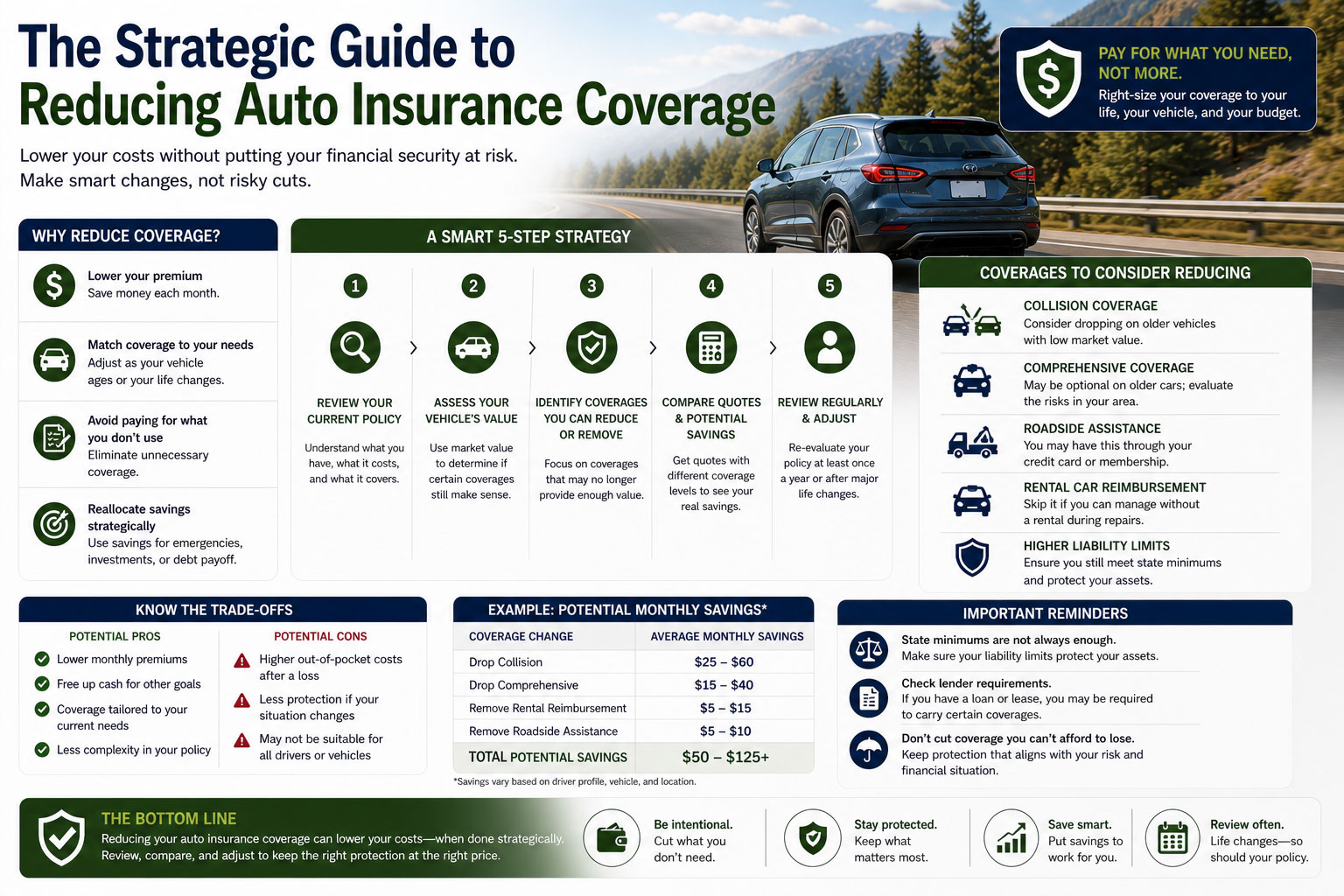
As a vehicle owner, your insurance needs are constantly evolving. What was a smart investment when your car was brand new may become a financial burden a few years later. The decision to drop full coverage is a common step for owners of aging vehicles. It involves weighing the certainty of a high monthly premium against the possibility of an out-of-pocket repair cost.
Understanding the timing and the financial math of this decision is key to long-term savings. Readers can use autoinsuranceplans.com to compare quotes from insurance companies. This tool allows you to see how much your rate would drop by removing specific coverages, giving you a clear picture of the potential savings before you call your agent.
2. What This Service Includes
Dropping full coverage is a modification of your existing auto insurance policy that narrows the protection to focus solely on legal requirements and third-party protection.
Defining the Service in Simple Terms
Full coverage is a non-technical term for having liability plus collision and comprehensive. Dropping it means you are only keeping the liability portion. This is often called “going liability-only.” You are essentially deciding that the car is no longer worth the cost of protecting it against physical damage.
What Is Typically Included in Liability-Only
Your policy will continue to include:
- Bodily Injury Liability: Pays for medical expenses of others if you are at fault.
- Property Damage Liability: Pays for damage to other cars or structures.
- Legal Defense: If you are sued following an accident, the insurer still provides a defense.
What is Usually Not Included
When you drop full coverage, you lose protection for:
- Theft and Vandalism: You get zero reimbursement if your car is stolen.
- Weather Damage: Hail, floods, and falling trees are no longer covered.
- At-Fault Accidents: If you hit a pole or another car, you pay 100 percent of your repair costs.
3. Average Cost Overview
The savings you experience depend on how much the insurance company was charging to cover the specific risk of your vehicle being damaged.
Price Breakdown by Coverage Type
| Service Option | Typical Monthly Cost Range |
| Liability-Only (Basic) | $40 to $80 |
| Collision Add-on | $50 to $120 |
| Comprehensive Add-on | $20 to $50 |
For many drivers, removing the collision and comprehensive add-ons can cut the monthly bill in half. If you are a high-risk driver, the savings could be even greater, as collision coverage is one of the most expensive parts of a high-risk policy.
Ready to move forward? Use www.autoinsuranceplans.com to compare quotes from trusted local auto insurance companies so you can secure a policy with confidence.
4. Key Cost Factors
Before you pull the trigger on a coverage change, consider these variables.
- Replacement Cost: If your car is a rare model or a truck that holds its value, full coverage remains a better deal for longer.
- Your Deductible Level: If you have been carrying a zero-dollar deductible, you are paying a massive premium. Changing to a high deductible might be a better middle ground than dropping coverage entirely.
- Annual Mileage: If you drive very little, your risk of a collision is low. This makes dropping full coverage a safer bet.
- Local Statistics: If you live in a city with very high auto theft rates, keeping comprehensive while dropping collision is often a smart compromise.
- Recent Local References: Check local used car prices. If the price of replacing your car is rising due to market shortages, you might want to keep coverage a bit longer.
5. Ways to Save Money Without Cutting Corners
The “Total Payout” Calculation
Calculate the maximum possible check you would receive after a total loss. Take the car’s value and subtract your deductible. If that number is less than two years’ worth of premiums, the insurance is not a good deal. For example, if your car is worth 2,000 dollars and your deductible is 500, the most you get is 1,500 dollars. If the coverage costs 750 dollars a year, you are breaking even in just two years.
Seek Discounts
Even after dropping full coverage, you can save on liability insurance. Look for safe driver discounts, multi-policy discounts, or discounts for professional organizations. These can bring your liability-only costs down even further.
6. Common Mistakes and Red Flags
A frequent mistake is dropping coverage on a car that you cannot afford to replace. If you need your car to get to your job, and you do not have 3,000 or 5,000 dollars in the bank, you should probably keep full coverage. The insurance is essentially your emergency fund.
Another red flag is failing to shop around when you make the switch. Some companies are very competitive for full coverage but have high rates for liability-only policies. Every time you change your coverage levels, you should check the market to see which insurer is best for your new risk profile.
7. Frequently Asked Questions (FAQ)
Is it better to have a high deductible or no coverage?
A high deductible is a good middle ground. It protects you from the total loss of your car while keeping monthly costs low.
Does full coverage protect my personal items inside the car?
No. Personal items like laptops or luggage are usually covered by homeowners or renters insurance, not your auto policy.
What is the “NADA” value?
NADA stands for the National Automobile Dealers Association. It is one of the primary sources insurers use to determine a car’s worth.
Can I drop collision and keep comprehensive?
Yes. Many drivers do this to stay protected against theft while saving money on accident coverage.
How does my age affect the decision?
Young drivers pay the most for collision insurance. For them, dropping full coverage can save thousands of dollars over a few years.
What happens if a tree falls on my car and I have liability only?
You are responsible for the full cost of the repairs or the loss of the vehicle.