
Auto Insurance News
Introduction
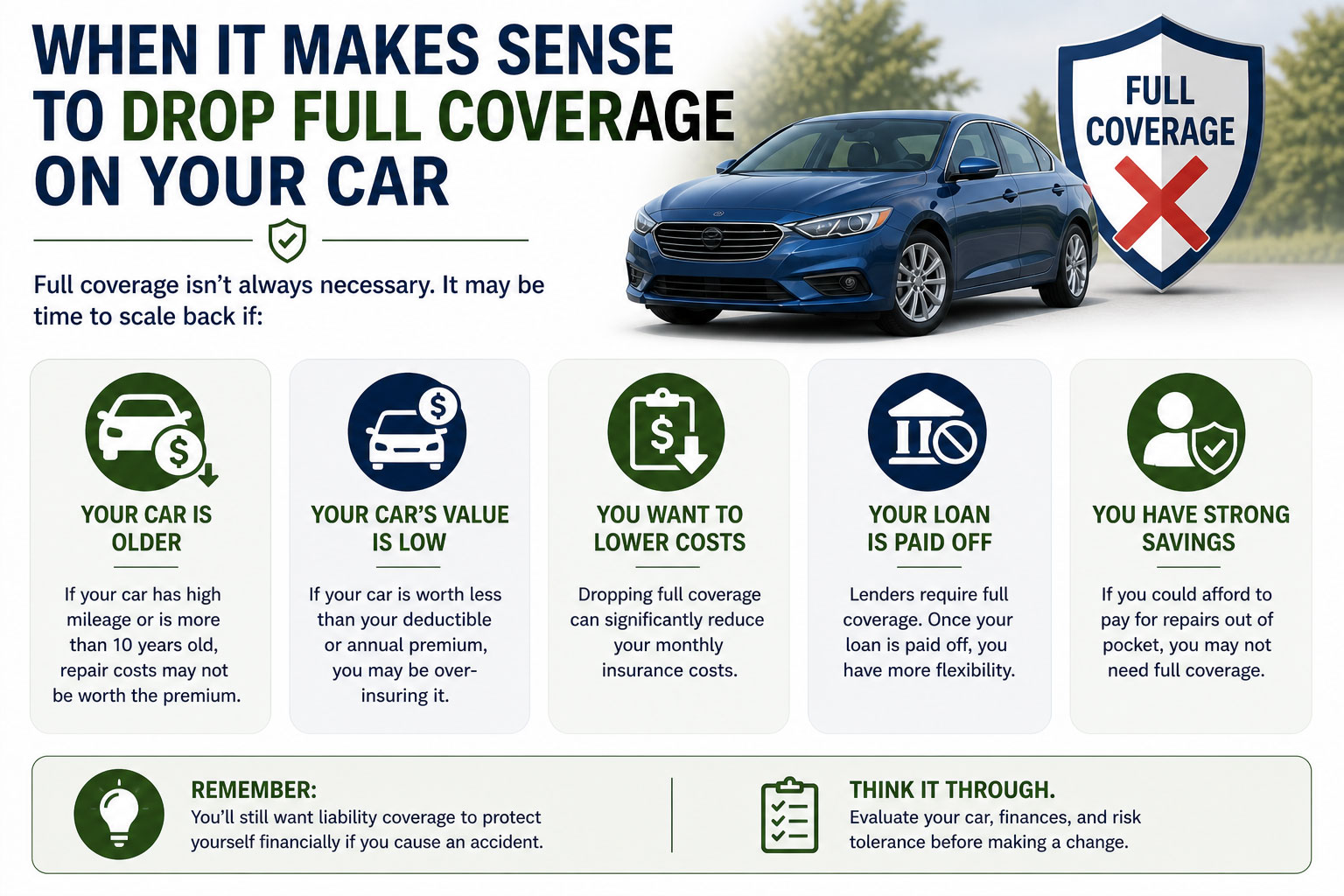
Full coverage auto insurance protects your vehicle from many types of damage, but it is not always the best financial choice. As your car ages and loses value, keeping full coverage may cost more than the protection it provides.
Many drivers reach a point where reducing coverage makes sense. If you are unsure when that point is, this guide will help you decide. You can also use autoinsuranceplans.com to compare quotes from multiple insurance companies and see how much you can save.
What This Service Includes
What Full Coverage Means
Full coverage is not a single policy. It usually combines:
- Liability insurance, which covers damage you cause to others
- Collision coverage, which pays for damage to your car after an accident
- Comprehensive coverage, which covers theft, weather damage, and vandalism
What Is Typically Included
- Repairs or replacement after a crash
- Coverage for stolen vehicles
- Protection against natural events like hail or flooding
What Is Not Included
- Routine maintenance
- Mechanical breakdowns
- Personal belongings inside the car
Optional add-ons may include roadside assistance, rental car coverage, and gap insurance.
Average Cost Overview
Full coverage costs vary widely based on location, driver history, and vehicle type. Below are general U.S. estimates.
Service option | Typical price range
Basic full coverage | $900 to $1,300 per year
Mid range full coverage | $1,300 to $2,000 per year
Premium full coverage | $2,000 to $3,500+ per year
What Drives Cost Differences
- Newer cars cost more to insure
- Drivers with accidents or tickets pay higher rates
- Urban areas often have higher premiums
If your car is worth less than $4,000 to $5,000, paying over $1,500 per year for full coverage may not be cost effective.
Ready to move forward? Use www.autoinsuranceplans.com to compare quotes from trusted local auto insurance companies so you can secure a policy with confidence.
Key Cost Factors
- Deductible
Higher deductibles lower your premium but increase out of pocket costs - Amount of coverage
More protection increases cost - Vehicle value
Lower value cars reduce the need for full coverage - At fault vs no fault history
Accidents raise premiums - Location
High traffic or theft areas increase costs - Driving habits
More miles driven means higher risk
Ways to Save Money Without Cutting Corners
- Keep liability coverage strong, even if you drop full coverage
- Raise your deductible instead of removing coverage entirely
- Compare multiple quotes before making changes
- Bundle insurance policies for discounts
- Review your policy annually
Required vs Optional Coverage
- Liability insurance is required in most states
- Collision and comprehensive are optional if the car is paid off
Common Mistakes and Red Flags
- Dropping full coverage too early
- Not checking the car’s current value
- Ignoring lender requirements
- Failing to build savings before reducing coverage
- Choosing the cheapest policy without understanding risks
Frequently Asked Questions (FAQ)
- When should I drop full coverage?
When your car’s value is low and you can afford to replace it. - Is full coverage required by law?
No, only liability is required in most states. - How much can I save?
Savings can range from $500 to over $1,500 per year. - What happens if I drop it?
You pay out of pocket for damage to your car. - Should I drop coverage on an older car?
Often yes, especially if the car is worth less than a few thousand dollars. - Does it affect my insurance history?
Not significantly, but continuous coverage is still important.