Auto Insurance News
Introduction
Auto insurance is not just about staying legal. It is about protecting the life you have built. If an uninsured driver hits you, they likely do not have the personal assets to pay for a lawsuit. This means that even if you win in court, you may never see a dime of that money. Uninsured and Underinsured Motorist (UM/UIM) coverage is the only way to guarantee that you are compensated for your losses, regardless of the financial status of the person who hits you.
Most people only shop for insurance when they buy a new car or move to a new home. However, with medical inflation at an all time high in 2026, your old coverage levels might no longer be sufficient. Using autoinsuranceplans.com allows you to evaluate your current coverage and compare it with the latest offerings from top insurers. This proactive approach is the best way to secure your family’s physical and financial well being.
What This Service Includes
UM and UIM are frequently bundled together as a single line item on your insurance declaration page, but they serve distinct purposes in the claims process.
Defining the Service in Simple Terms
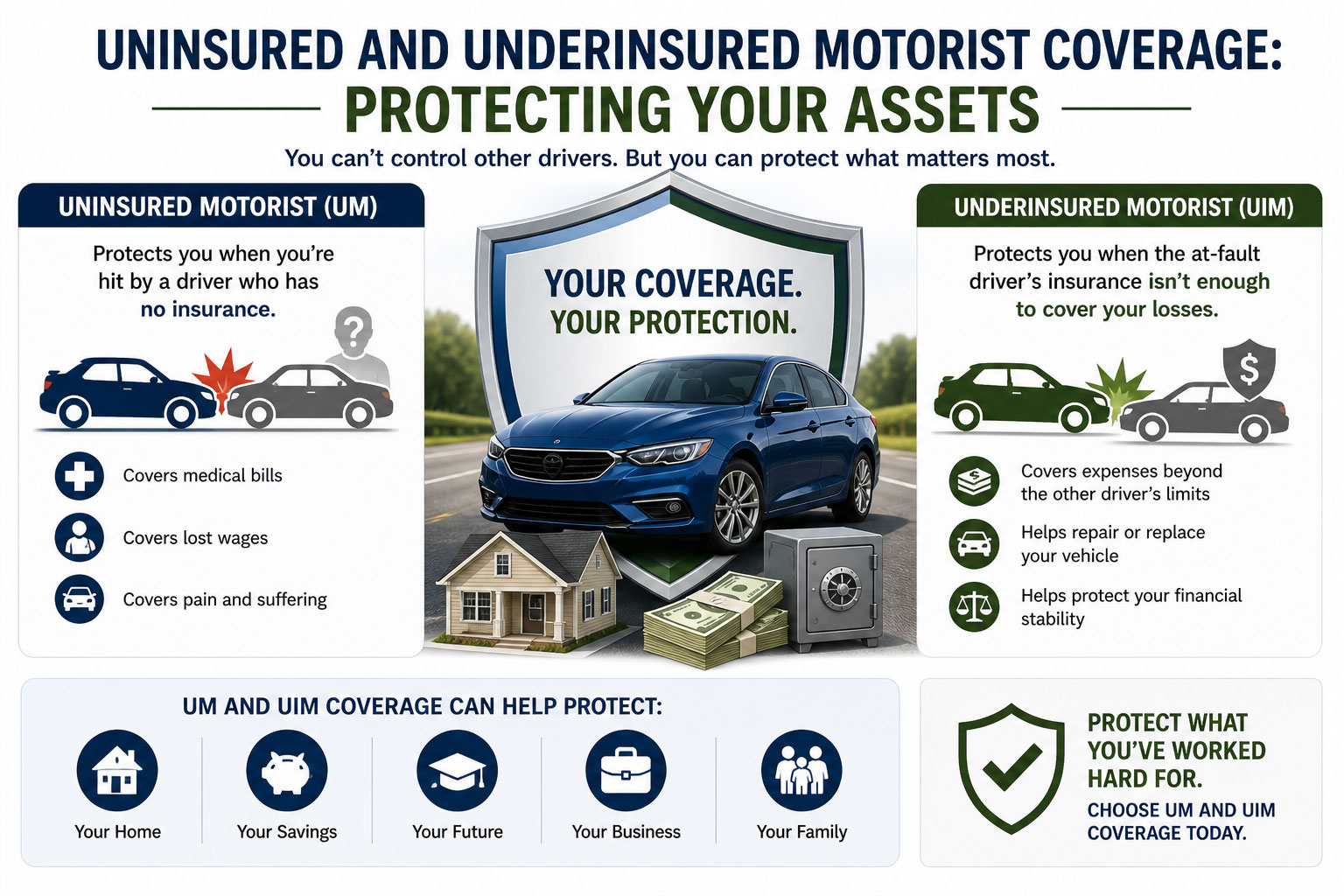
Uninsured Motorist coverage protects you when the at-fault party has no insurance. Underinsured Motorist coverage protects you when the at-fault party has some insurance, but it is not enough to cover the total bill. Together, they create a comprehensive shield around you and your vehicle.
What is Typically Included
When you buy this service, you are essentially buying a “substitute” for the other driver’s liability insurance. Included in this is coverage for funeral expenses in the event of a fatal accident. It also covers “consequential damages,” which include the cost of hiring help for household chores that you can no longer perform due to your injuries.
In terms of property, UMPD (Property Damage) usually covers the repair cost of your car up to its actual cash value. In some policies, this also includes a “waiver of deductible.” This means that if an uninsured driver hits you, you do not have to pay your standard 500 or 1,000 dollar deductible to get your car fixed.
What is Usually Extra or Not Included
Standard UM/UIM does not cover medical expenses for your pets, nor does it cover specialized medical equipment like wheelchairs unless specifically noted. It also does not cover “diminished value.” If your car is repaired but is now worth less because it has an accident on its history, UM/UIM typically will not pay the difference in value.
One major thing that is often extra is “Personal Injury Protection” (PIP) or “Medical Payments” (MedPay). While UMBI covers medical bills, it only pays out if someone else was at fault. PIP and MedPay pay out regardless of fault. To have “bulletproof” coverage, many drivers choose to carry both PIP and UMBI.
Average Cost Overview
Investing in UM and UIM is one of the most cost effective ways to increase your insurance limits. The “cost per thousand” of coverage is much lower for UM/UIM than for basic liability.
Typical Price Ranges
Prices vary based on state laws and the percentage of uninsured drivers in your area. For a typical policy in 2026:
- Typical low price range: 5 to 10 dollars per month.
- Typical average price range: 15 to 30 dollars per month.
- Typical high price range: 40 to 60 dollars per month.
Service Option Cost Table
| Coverage Tier | Typical Monthly Cost | Typical Annual Total |
| Economy (30/60 limits) | $7 to $12 | $84 to $144 |
| Standard (100/300 limits) | $18 to $28 | $216 to $336 |
| Premium (250/500 limits) | $35 to $55 | $420 to $660 |
What Drives the Low Versus High Ends
If you choose a low deductible for your UMPD, you will be on the high end of the cost spectrum. If you live in a state like Maine or Vermont, where the uninsured driver rate is among the lowest in the nation, you will be on the low end.
The biggest driver of the “Premium” price is the addition of an Umbrella Policy. If you have an umbrella policy for one million dollars, you can often add UM/UIM protection to that umbrella. This provides massive protection but naturally carries a much higher premium than a standalone auto policy add-on.
Ready to move forward? Use www.autoinsuranceplans.com to compare quotes from trusted local auto insurance companies so you can secure a policy with confidence.
Key Cost Factors
Pricing is not random. It is based on actuarial data that predicts the likelihood of a claim.
- Stacking Availability: In states like Pennsylvania or Florida, you can stack coverage. If you choose this, the insurance company charges more because they are taking on a larger potential liability.
- Uninsured Motorist Property Damage (UMPD) vs. Collision: If you drop collision coverage on an old car, UMPD becomes more important. Its price will be influenced by the value of your vehicle.
- Window Replacement: Some UM/UIM policies overlap with glass coverage. If your policy has a “full glass” rider, this will be reflected in the property damage portion.
- At-Fault vs. No-Fault States: In “tort” states, the determination of fault is everything. UM/UIM is highly utilized here. In no-fault states, these coverages are often secondary to PIP, which can make the base premium slightly different.
- Local Crime Rates: Vehicle theft and vandalism are often covered under comprehensive, but hit and run accidents in high crime areas are a UM issue. This affects the premium for drivers in major metropolitan areas.
- Driver Demographics: Younger drivers (under 25) and very senior drivers (over 75) often pay more for all types of coverage, including UM/UIM, due to a higher statistical frequency of accidents.
Ways to Save Money Without Cutting Corners
Budgeting for auto insurance requires a balance between risk and reward. You can trim your costs without leaving yourself vulnerable.
What Coverage is Required and What is Optional
Check if your state allows for “Unstacked” coverage. Many people pay for stacking without realizing it. If you only own one vehicle, stacking provides no benefit at all. Ensure your policy is listed as “unstacked” to save as much as 15 percent on your UM/UIM premium. Also, look for “Safe Driver” discounts. Some companies will discount your entire policy, including add-ons, if you use a telematics app that proves you drive responsibly.
Comparing Multiple Quotes
The most powerful tool in your financial arsenal is information. Do not assume your current carrier is giving you the best deal just because you have been with them for years. Carriers often change their algorithms for calculating UM/UIM risk. Use autoinsuranceplans.com to get a fresh perspective on the market. Comparing at least three quotes every six months can help you find hidden savings and better coverage terms that you might have missed.
Common Mistakes and Red Flags
A common mistake is “matching the minimums.” Just because your state requires 25,000 dollars doesn’t mean it’s a good idea. In 2026, 25,000 dollars might only cover two days in a hospital.
A red flag to watch for is a policy that requires “physical contact” for a hit and run claim to be valid. Some low cost insurers will deny your claim if you swerved to miss a car and hit a tree, but never actually touched the other vehicle.
Another error is ignoring the “Family Member” exclusion. Some policies exclude coverage for family members who live with you but are not listed on the policy. If your spouse is injured by an uninsured driver while driving your car, and they aren’t on the policy, you could be facing a massive bill with no insurance support.
Frequently Asked Questions (FAQ)
Is UM coverage the same as Liability?
No. Liability pays for other people when you are at fault. UM pays for you when someone else is at fault but has no insurance.
How fast can I activate this coverage?
You can usually add UM/UIM to your policy in minutes. Most major insurance companies allow you to make this change via their mobile app or website, and it becomes effective as soon as you receive a confirmation email.
Is it safe to assume the other driver has insurance?
Statistically, no. In many parts of the U.S., more than 20 percent of drivers are uninsured. Assuming they have insurance is a gamble with your financial future.
Does UMBI cover mental health?
Yes. In many cases, “Bodily Injury” includes the mental and emotional trauma associated with a serious accident, such as PTSD or anxiety. This is often covered under the “pain and suffering” portion of a UM settlement.
What is the “Quality” difference in UM coverage?
High quality companies have dedicated UM/UIM claims adjusters who understand the specific legal nuances of these cases. Lower quality companies may lump these claims in with standard liability, leading to slower resolutions.
Is there a deductible for medical claims?
Usually, no. Uninsured Motorist Bodily Injury (UMBI) typically has no deductible, unlike the property damage portion of the policy.
Can I use UM if I was a pedestrian?
Yes, most standard UM policies cover you if you are hit by a car while walking or jogging. This makes it a vital protection for city dwellers.
What if the other driver has some insurance, but it is very little?
That is exactly what Underinsured Motorist (UIM) coverage is for. It picks up where their small policy stops, ensuring your bills are paid in full.